
Mesquita CS, Soares-Castro P, Faustino A, Santos HM, Capelo JL and Santos PM (2019). Identification of genomic loci associated with genotypic and phenotypic variation among Pseudomonas aeruginosa clinical isolates from pneumonia. Microb Pathog, 136: 103702. doi: 10.1016/j.micpath.2019.103702.
doi: 10.1016/j.micpath.2019.103702
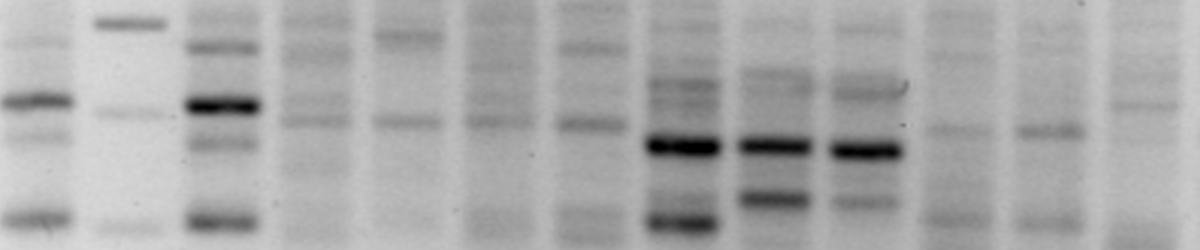
Abstract: In this work, a genotype-phenotype survey of a highly diversified Pseudomonas aeruginosa collection was conducted, aiming to detail pathogen-associated scenarios that clinicians face nowadays. Genetic relation based on RAPD-PCR of 705 isolates, retrieved from 424 patients and several clinical contexts, reported an almost isolate-specific molecular-pattern. Pneumonia-associated isolates HB13 and HB15, clustered in the same RAPD-PCR group, were selected to evaluate the genomic background underlying their contrasting antibiotic resistance and virulence. The HB13 genome harbors antibiotic-inactivating enzymes-coding genes (e.g. aac(3)-Ia, arr, blaVIM-2) and single-nucleotide variations (SNVs) in antibiotic targets, likely accounting for its pan-resistance, whereas HB15 susceptibility correlated to predicted dysfunctional alleles. Isolate HB13 showed the unprecedented rhl-cluster absence and variations in other pathogen competitiveness contributors. Conversely, HB15 genome comprises exoenzyme-coding genes and SNVs linked to increased virulence. Secretome analysis identified signatures features with unknown function as potential novel pathogenic (e.g. a MATE-protein in HB13, a protease in HB15) and antibiotic resistance (a HlyD-like secretion protein in HB13) determinants. Detection of active prophages, proteases (including protease IV and alkaline metalloproteinase), a porin and a peptidase in HB15 highlights the secreted arsenal likely essential for its virulent behavior. The presented phenotype-genome association will contribute to the current knowledge on Pseudomonas aeruginosa pathogenomics.
Keywords: Pseudomonas aeruginosa; epidemiological study; Genotype profiling; Virulence factors; Antimicrobial resistance; Comparative genomics